
Starting a new business location is exciting, until you realize how many moving parts are behind the walls.
If you’re building or developing a commercial space in Pennsylvania, your electrical setup is one of the most important systems to get right from day one. It affects everything from safety and inspections to tenant usability, equipment performance, and your ability to grow without tearing everything apart two years later.
That’s why new construction commercial electrical work isn’t just about “getting power to the building.” It’s about building the right infrastructure for how your business actually operates now — and how it may expand later.
Whether you’re developing office space, retail, mixed-use property, warehouse space, or a specialty commercial facility, smart planning matters. The right commercial electrical solutions can help you avoid overloads, reduce downtime, stay compliant, and make future improvements much easier.
Here’s what Pennsylvania business owners and developers should know before the drywall goes up.
Commercial vs. Residential: Why the Demands Are Completely Different
A lot of people assume electrical is electrical.
It’s not.
A house and a commercial building may both need lights, outlets, and a panel, but the demands on those systems are in totally different leagues. Commercial spaces often need to support heavier equipment, larger HVAC loads, more lighting zones, technology systems, security devices, signage, refrigeration, or tenant-specific operational needs.
That’s why commercial electrical installation requires a very different level of planning than residential work.
With business electrical systems, you’re not just asking:
- “Where do we want the outlets?”
- “How many lights do we need?”
You’re also asking:
- How much power will this space need during peak operating hours?
- What equipment is being installed now?
- What equipment may be added later?
- How should the system be divided for efficiency and maintenance?
- What’s required for inspections and occupancy approval?
For many Pennsylvania businesses, especially in new construction, electrical needs can quickly become more complex than expected. A retail store has different demands than a medical office. A restaurant has different demands than a warehouse. A multi-tenant commercial property has an entirely different set of challenges again.
That’s where properly designed commercial electrical solutions become essential. You need infrastructure that isn’t just “working,” but working correctly, safely, and strategically.
New Construction Means You Only Get One “Easy” Chance to Do It Right
There’s one huge advantage to new construction: access.
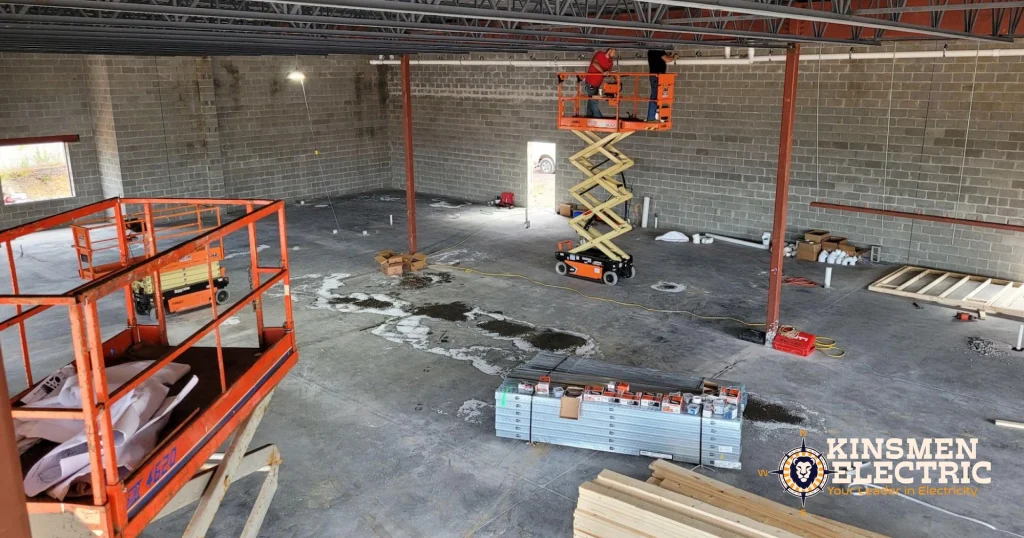
Before walls are closed, ceilings are finished, and tenants move in, you have the best possible opportunity to design your electrical layout intelligently. This is the time to think beyond the immediate opening date and plan for long-term functionality.
That’s especially important with new construction commercial electrical because future changes can get expensive fast. Moving panels, adding dedicated circuits, increasing service capacity, or retrofitting systems after occupancy is almost always more disruptive and more expensive than planning ahead now.
If you’re a business owner or developer, this is where an experienced commercial electrician brings real value. Good planning helps support:
- Current operational needs
- Future tenant improvements
- Better energy efficiency
- Cleaner equipment distribution
- Easier maintenance and troubleshooting
- Safer, code-compliant infrastructure
In other words, you’re not just paying for installation. You’re investing in fewer headaches later.
Service Entrance and MDP: The Backbone of Your Power System
If your building’s electrical system had a command center, this would be it.
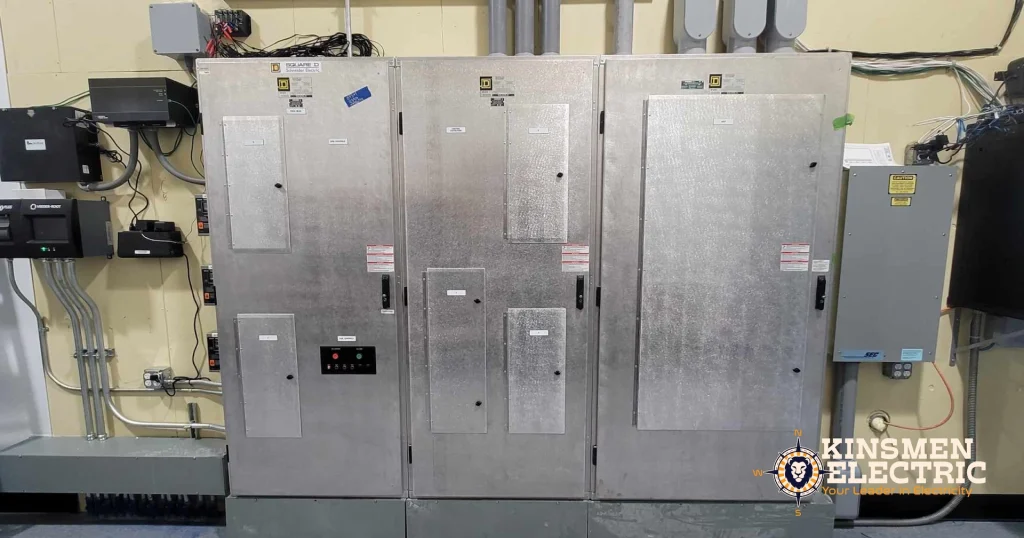
The service entrance is where utility power enters the building. From there, power is distributed through your Main Distribution Panel (MDP) and any additional panels or subpanels throughout the property.
This central infrastructure is one of the most important parts of commercial electrical installation, because if it’s undersized, poorly planned, or difficult to expand, everything downstream becomes harder.
For new businesses, especially those with growth plans, this stage is where electrical planning can make or break long-term usability.
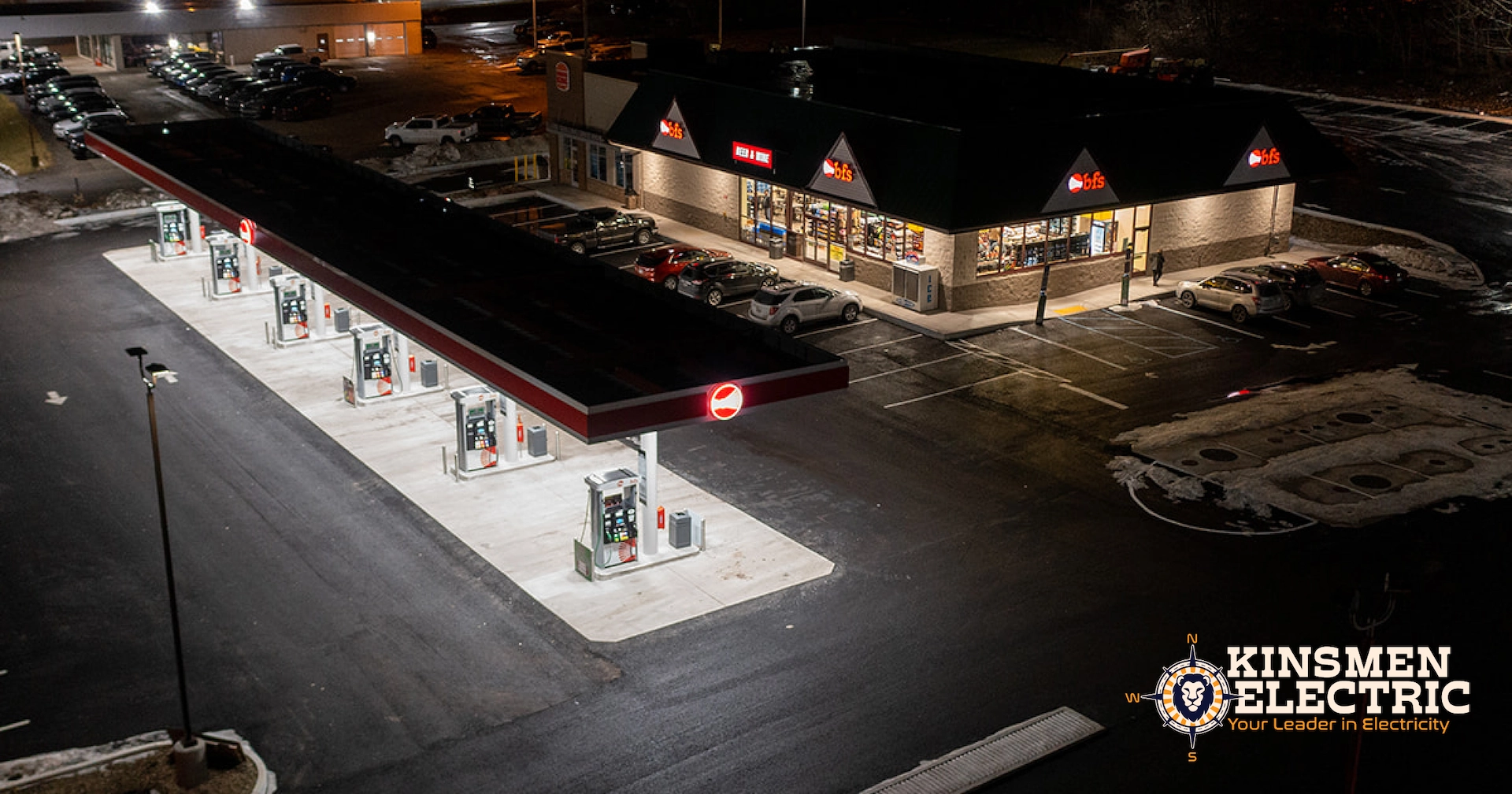
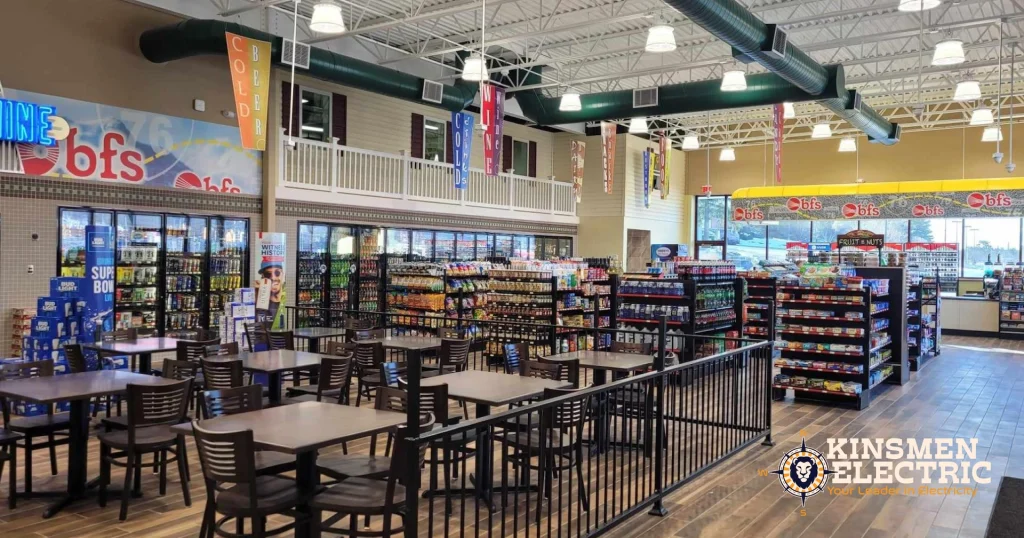
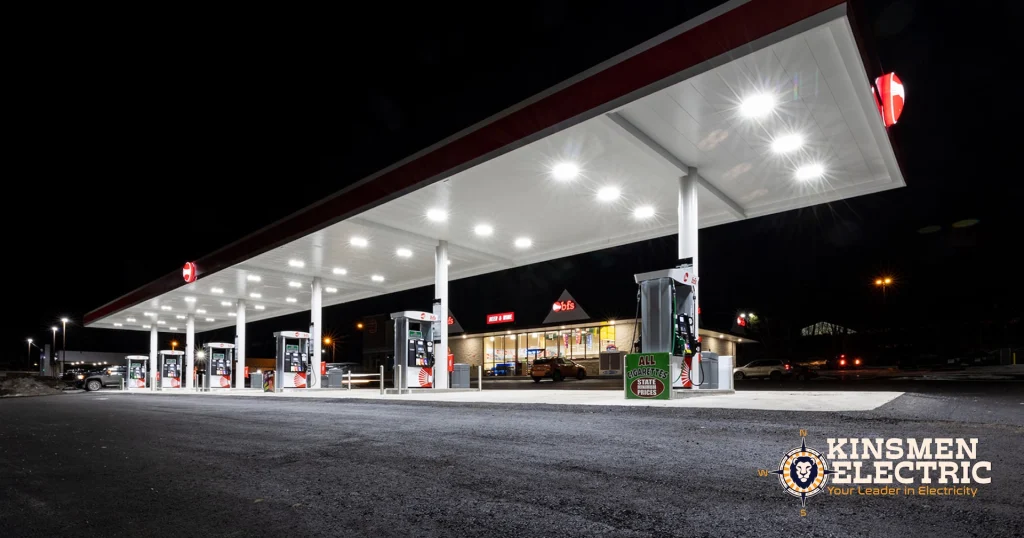
For example, at the BFS Somerset commercial project, Kinsmen Electric delivered a comprehensive electrical infrastructure solution that set the groundwork for long-term functionality and future growth. From a properly sized service entrance and MDP to thoughtful panel layout and load management, this project highlights how smart early planning prevents headaches later.
You can see photos and details from the project here: BFS Somerset Electrical Project Gallery.
Why it matters so much
Your service entrance and distribution setup affect:
- Total building capacity
- Equipment reliability
- Future expansion options
- Tenant flexibility
- Safety and code compliance
- Ease of maintenance and repairs
If you’re developing commercial space for future tenants, this becomes even more important. A tenant may need dedicated circuits, specific voltage requirements, upgraded HVAC support, or specialized lighting and equipment. If the original electrical backbone doesn’t allow for those changes, improvements become more complicated and expensive.
That’s why new construction commercial electrical should always be planned with scalability in mind.
Load Management: Don’t Build for “Barely Enough”
One of the biggest mistakes in commercial construction is designing an electrical system that technically works — but only for the exact current use.
That’s a risky move.
Commercial buildings evolve. Equipment changes. Workflows change. Tenants change. Power demands increase. And if your electrical system has no room to breathe, you’ll feel it.
This is where commercial load management becomes critical.
Load management is the process of evaluating how electricity will actually be used across your building and making sure the system can support those demands efficiently and safely. It’s not just about total capacity — it’s also about how power is distributed, where demand spikes may happen, and how to avoid overloading critical circuits.
Examples of commercial load concerns include:
- HVAC systems cycling during peak hours
- Kitchen or breakroom equipment running simultaneously
- Office technology and server equipment
- Refrigeration or specialty machinery
- Exterior lighting and signage
- EV charging or future power upgrades
- High-demand tenant equipment
This is especially important when working with high-voltage electrical systems, which often serve larger commercial properties or spaces with more intensive power requirements.
The goal isn’t to overbuild blindly. It’s to build smart.
A well-designed electrical system supports today’s operations without forcing costly upgrades every time your business adds one more piece of equipment, one more tenant, or one more improvement project.
That’s what strong commercial electrical solutions should do: give you room to grow.
Lighting for Productivity, Safety, and Everyday Function
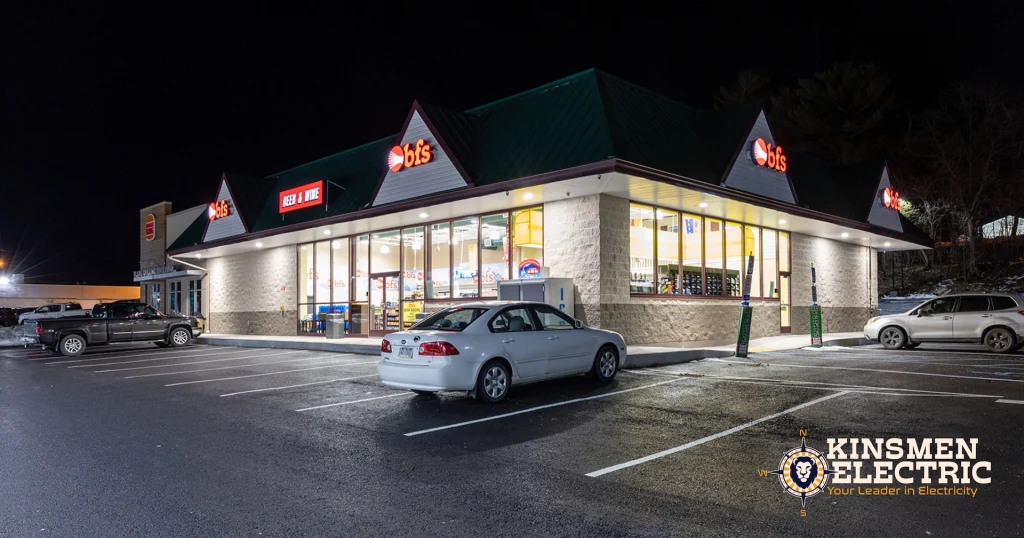
Lighting is one of the first things people notice in a commercial space — but it’s also one of the most overlooked during planning.
Too often, business owners think of lighting as a finishing touch. In reality, it’s a core part of your electrical design and has a direct impact on safety, productivity, appearance, and customer experience.
A thoughtful commercial electrical installation should include multiple layers of lighting based on how the building will actually be used.
Most commercial spaces need a combination of:
General lighting
This is the baseline lighting that supports everyday visibility throughout the building.
Task lighting
These fixtures support work-specific needs, whether that’s office stations, prep areas, counters, equipment spaces, or work bays.
Accent or display lighting
Often used in retail, hospitality, or customer-facing spaces to improve visibility and presentation.
Emergency lighting
Required for safety and code purposes, especially in hallways, exits, stairwells, and common areas.
Lighting should never be an afterthought in business electrical systems. Poor planning can lead to dark work zones, overlit spaces, wasted energy, or frustrating retrofits after move-in.
For developers and business owners, good lighting planning also supports:
- Better employee productivity
- Improved customer experience
- Cleaner space design
- Lower maintenance issues
- Better long-term efficiency
And yes, it also helps avoid the dreaded “Why is this room weirdly dark?” moment after construction is complete.
Protection Systems: Because Downtime Is Expensive
If your business loses power, experiences a surge, or suffers equipment damage, it’s rarely “just an inconvenience.”
It costs money.
Commercial electrical systems need to do more than distribute power — they also need to protect the building and the equipment connected to it. That’s where protective infrastructure becomes a major part of commercial electrical solutions.
Two of the biggest considerations are surge protection systems and backup power for businesses.
Surge Protection Systems
Power surges can happen for several reasons, including storms, utility disruptions, internal equipment cycling, or issues related to larger building systems. Even a short event can damage electronics, shorten equipment lifespan, or affect operations.
Installing surge protection systems as part of your initial electrical design helps protect:
- Computers and workstations
- POS systems
- Security systems
- Network and communications equipment
- Refrigeration or specialty equipment
- Sensitive electronics and controls
For a new commercial space, this is one of those “small decision now, big protection later” upgrades.
Backup Power for Businesses
Depending on your building type and operational needs, backup power may not be optional — it may be essential.
Backup power for businesses can include:
- UPS systems for short-term continuity
- Emergency circuits for critical systems
- Standby generators for extended outages
This matters even more for:
- Medical or healthcare-related spaces
- Businesses with refrigerated inventory
- Offices with server or communications needs
- Security-dependent facilities
- Tenant spaces requiring uninterrupted operations
No business owner wants to explain to customers, tenants, or employees that operations are down because one power issue knocked out the whole building.
Protection planning helps prevent that.
Code Compliance Isn’t “Extra” — It’s the Job
Here’s the part nobody gets excited about but absolutely has to be done right: code.
In commercial construction, electrical code compliance for businesses is not a technicality. It’s a major part of whether your project moves forward smoothly or gets stuck in inspection limbo.
And in Pennsylvania, code compliance matters not only at the state level, but often at the local municipal level as well. Depending on the project and jurisdiction, requirements may involve permitting, inspections, panel labeling, emergency systems, grounding, service specifications, occupancy needs, and more.
This is one reason why new construction commercial electrical work should always be handled by professionals who understand commercial applications — not just general electrical basics.
What proper code planning helps you avoid:
- Failed inspections
- Delays in opening or occupancy
- Costly rework
- Safety issues
- Insurance concerns
- Future upgrade complications
Good electrical contractors don’t just install systems. They help guide the project through the realities of approval, inspection, and compliance.
That’s a huge value for developers and business owners who already have enough on their plate.
Because honestly, nobody wants to be one missing disconnect or one labeling issue away from a construction delay.
Navigating Permits and Inspections the Right Way
If you’ve ever worked on a commercial buildout, you already know this part can get messy fast.
Permits, inspections, plan coordination, revisions, and local approval processes can create bottlenecks if your electrical work isn’t organized properly from the start.
For business owners who are still mapping out the overall startup or expansion process, Pennsylvania’s Business One-Stop Shop can be a helpful resource alongside your contractor and project team.
This is where working with a qualified commercial electrician makes a major difference. A professional team understands the process behind:
- Electrical plan coordination
- Permit requirements
- Inspection readiness
- Commercial safety standards
- Utility coordination
- Code updates and local expectations
For business owners and developers, that means less guesswork and fewer avoidable delays.
It also makes tenant improvements much easier to manage. If you’re building or renovating a commercial property that will eventually house tenants, your electrical design needs to support flexibility. A clean, compliant, expandable system makes future changes much more manageable.
That’s a huge win if your property needs to adapt over time.
Why Scalability Should Be Built Into the Plan
One of the smartest things you can do in a new commercial build is ask this question:
“What will this business need in five years — not just on opening day?”
That mindset changes everything. For business owners and developers thinking beyond immediate occupancy, Pennsylvania offers additional business development resources that can support broader growth planning alongside the physical infrastructure of the space.
Scalable business electrical systems allow your space to evolve without starting from scratch. That could mean planning for:
- Additional equipment
- Tenant reconfiguration
- Expanded office space
- More lighting zones
- Future technology needs
- Increased load capacity
- Backup power upgrades
This is especially important in today’s commercial environment, where businesses rely on more systems, more connectivity, and more equipment than ever before.
A forward-thinking commercial electrical installation gives you options. And options are valuable.
Because the best electrical work is often the kind you don’t have to think about later.
Build It Right the First Time
When you’re launching a new business space or developing commercial property, electrical planning isn’t the place to cut corners.
The right commercial electrical solutions help create a building that’s safe, scalable, efficient, and ready for real-world use. From high-voltage electrical systems and commercial load management to lighting, protection systems, and electrical code compliance for businesses, every decision made early in the project affects how well the space performs later.
And if you’re investing in new construction commercial electrical, that’s exactly what you want: infrastructure that supports your business instead of slowing it down.
At the end of the day, your electrical system should do more than turn the lights on.
It should help your business move forward with confidence.