
If your electricity bills have been climbing month after month, you’re not imagining things. Across Pennsylvania and the rest of the country, residential energy costs continue to rise — and homeowners across Western Pennsylvania are feeling it. But there’s a smarter path forward.
Solar energy systems have quietly become one of the most powerful financial tools available to homeowners who want to stop renting their power from the grid and start owning it.
At Kinsmen Electric, we’ve helped homeowners throughout Pennsylvania make the switch to solar with confidence.
This guide will walk you through everything you need to know about maximizing the return on your solar investment — from understanding your options to avoiding the costly mistakes that many homeowners make when they try to cut corners.
Why Solar Energy Systems Are a Long-Term Financial Strategy
Most people think of solar as an environmental choice. And yes, it is. But the homeowners who benefit the most from solar energy systems treat the installation like what it really is: a long-term investment with measurable, predictable returns.
According to the U.S. Energy Information Administration, the average monthly electric bill for U.S. residential customers was $144 in 2024 (source: U.S. Energy Information Administration) — that’s roughly $1,728 per year.
And with the average residential price of electricity rising from 13.72 cents per kilowatt-hour in July 2021 to 17.47 cents in July 2025 (according to Palmetto), there’s no sign that trend is reversing anytime soon.
Why DIY Electrical Troubleshooting Is Never Worth the Risk

Let’s address something that comes up often when homeowners start researching solar: the temptation to self-install or self-troubleshoot.
We understand the appeal. There’s no shortage of YouTube tutorials and online forums that make residential solar installation look manageable for a determined DIYer. But here’s what those videos consistently leave out: solar energy systems involve both high-voltage DC current from the panels and AC current from your home’s electrical panel — and that combination creates serious, potentially fatal fire and electrocution hazards.
Unlike a standard household appliance, solar systems don’t simply “turn off” when you flip a switch. Photovoltaic panels continue generating electricity as long as light hits them — even on a cloudy day, even during a fire response. This means that improperly wired systems can put you, your family, and even emergency responders at risk.
In Pennsylvania, solar installations must comply with the National Electrical Code (NEC), local building codes, and utility interconnection requirements. Unpermitted installations can jeopardize your homeowner’s insurance coverage, void manufacturer warranties, trigger fines, and create serious liability issues if something goes wrong. The risk isn’t hypothetical — it’s well-documented.
Kinsmen Electric approaches every solar energy system installation in Somerset PA with licensed electricians who specialize in solar-ready panel upgrades and safe, code-compliant wiring from the first connection to the last inspection.
Common Symptoms of Hidden Electrical Faults in Solar Systems
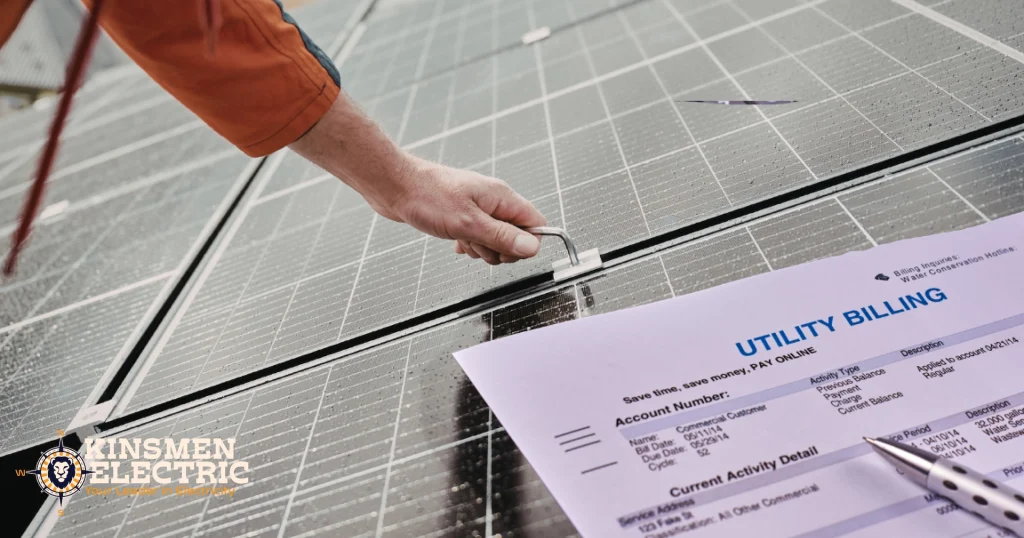
If you’ve recently had solar panels installed — or you’re purchasing a home that already has them — it’s important to know the warning signs of underlying electrical issues. These faults aren’t always obvious, and that’s exactly what makes them dangerous.
Watch for These Red Flags
Unexplained spikes in your electricity bill. If your solar system was designed to significantly offset your usage but your bills haven’t dropped — or have actually gone up — something isn’t performing as expected. This could indicate a wiring fault, an inverter issue, or panels that aren’t properly connected to your system.
Flickering lights or intermittent power. Solar systems integrated with your home’s electrical panel should deliver smooth, consistent power. Flickering or surges can indicate grounding problems or inverter instability that needs professional diagnosis.
Tripped breakers that keep returning. A breaker that trips repeatedly isn’t just inconvenient — it’s a symptom, not the problem. Treating it as the problem (by simply resetting it) can allow an underlying fault to worsen over time. We’ll address this more below.
Discoloration or hot spots around the electrical panel. Any scorch marks, burning smells, or unusual warmth near your breaker box or solar equipment are immediate red flags. Do not attempt to investigate these yourself. Call a licensed electrician right away.
System monitoring alerts you’re ignoring. Most modern solar energy systems come with monitoring apps or portals that track daily production. If your system is consistently underperforming its projections and you’ve dismissed the alerts, it’s time to have a professional take a look.
Early detection of these symptoms is one of the most important factors in protecting both your investment and your home. If you’re noticing any of these issues with your solar panel installation in Somerset PA, don’t wait.
Our Expert Diagnostic Process at Kinsmen Electric

When a homeowner contacts Kinsmen Electric with a concern about their solar energy system, we don’t guess — we diagnose. Our process is methodical, thorough, and designed to identify root causes rather than surface symptoms.
Step 1: System Review and History We start by reviewing your system’s specifications, installation records, and monitoring data. Understanding how the system was designed and how it’s been performing gives us a critical baseline before we ever touch a wire.
Step 2: Visual Inspection Our licensed electricians conduct a detailed visual inspection of your solar panels, racking system, conduit runs, inverter, and electrical panel connections. We’re looking for signs of improper installation, physical damage, pest intrusion, and code violations.
Step 3: Electrical Testing Using professional-grade diagnostic equipment, we test voltage, current, and resistance across your system’s components. This allows us to identify faults that aren’t visible to the naked eye — including issues inside your walls or conduit runs.
Step 4: Inverter and Production Analysis The inverter is the brain of your solar energy system. We analyze its performance data, error logs, and output efficiency to determine whether it’s functioning within manufacturer specifications.
Step 5: Report and Recommendation Every diagnostic visit concludes with a clear, written summary of our findings. We explain what we found, why it matters, and what the most effective path forward looks like — in plain language, without upselling you on services you don’t need.
This is what professional solar installer Somerset homeowners deserve: transparency, expertise, and results.
Why “Resetting the Breaker” Isn’t a Permanent Fix
This deserves its own section because it’s one of the most common — and most dangerous — responses homeowners have to electrical problems.
When a breaker trips, it’s doing exactly what it’s designed to do: interrupting a circuit that’s drawing more current than it should. The breaker itself isn’t the problem. It’s the messenger. And when you reset the breaker without investigating why it tripped, you’re silencing the messenger while the real issue continues unchecked.
In the context of solar energy systems, a repeatedly tripping breaker could indicate:
- An overloaded circuit caused by improper system sizing
- A ground fault in the solar wiring or array
- A failing inverter drawing excess current
- Deteriorating insulation on aging or improperly installed wiring
- A loose or corroded connection creating resistance and heat
Left unaddressed, any of these issues can escalate into an electrical fire. According to the National Fire Protection Association, electrical failures are among the leading causes of residential house fires in the United States. The risk is compounded in solar systems because of the constant DC current being generated during daylight hours.
If your breaker is tripping more than once, the right call is a professional electrician — not a reset. At Kinsmen Electric, our diagnostic process is designed specifically to find the source of these faults before they become emergencies.
Maximize Solar ROI Somerset PA: What the Numbers Look Like

Now that we’ve covered the safety foundation, let’s return to what most homeowners want to know: what does the return on investment actually look like for residential solar installation in Somerset?
Here’s a simplified breakdown for a typical Somerset County home:
- Average system size: 7–10 kW
- Estimated installation cost: $18,000–$26,000 before incentives
- Average annual electricity savings: $1,200–$1,800
- Simple payback period: 10–14 years
- System lifespan: 25–30 years
That means the average homeowner who goes solar with a properly installed, code-compliant system can expect more than a decade of essentially free electricity after reaching their payback point — a return most traditional investments would struggle to match.
To maximize solar ROI in Somerset PA, the system needs to be right from day one: properly sized, expertly installed, and fully compliant with all local and state requirements. That’s exactly what Kinsmen Electric delivers.
Fast, Professional Troubleshooting for Pennsylvania Residents
Whether you’re exploring solar energy systems for the first time or dealing with performance issues in an existing installation, Kinsmen Electric is Somerset’s trusted local partner for residential solar.
We serve homeowners throughout Somerset County who want honest answers, safe installations, and systems that actually perform as promised. Our team of licensed electricians brings deep expertise in both solar energy systems Somerset PA and the broader electrical work required to make your home truly solar-ready.
Don’t let a tripped breaker, a suspicious spike in your electric bill, or a lingering worry about a DIY installation go unaddressed. The risks are real — and so are the solutions.Contact Kinsmen Electric today to schedule a diagnostic visit or a no-pressure solar consultation. We’ll help you understand exactly what your home needs, what it will cost, and what you can realistically expect to save — so you can make a confident, informed decision about your energy future.