
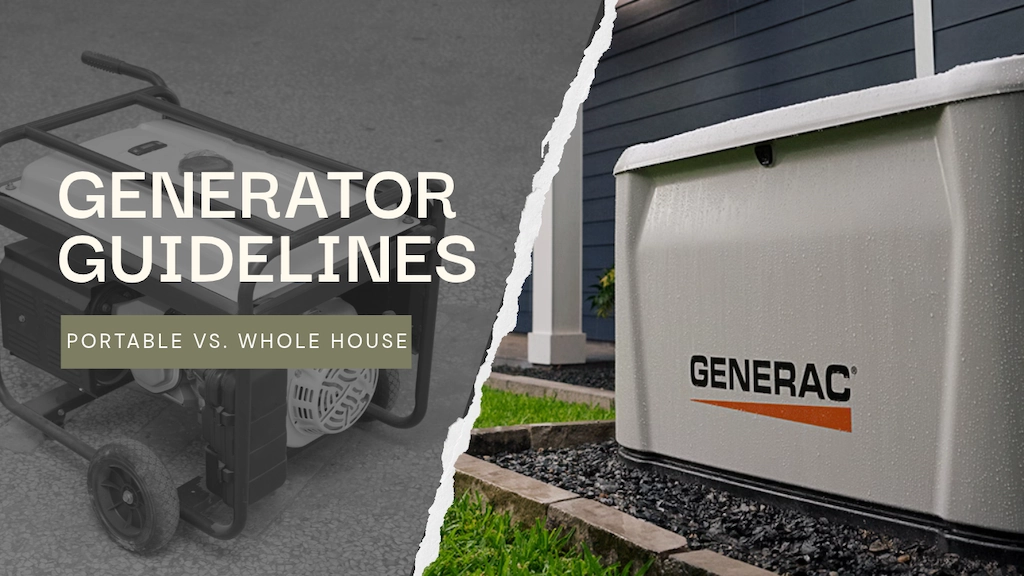
When the power goes out during a winter storm, even a few hours without electricity can disrupt your entire household. Your refrigerator stops running, your lights go dark, and your heating system may no longer keep your home comfortable. If you rely on a well pump, sump pump, or essential medical equipment, an outage can create even bigger concerns.
For homeowners in Western Pennsylvania, having a backup power plan can make a real difference when severe weather interrupts electricity.
But which option makes the most sense for your home? A portable generator may be enough to power a few essentials, while a whole-home standby generator offers a more convenient way to keep selected systems or much of your home running during an outage.
Understanding the differences between a whole-home generator and a portable generator can help you choose a solution that fits your household, budget, and backup power needs.
What Is a Portable Generator?
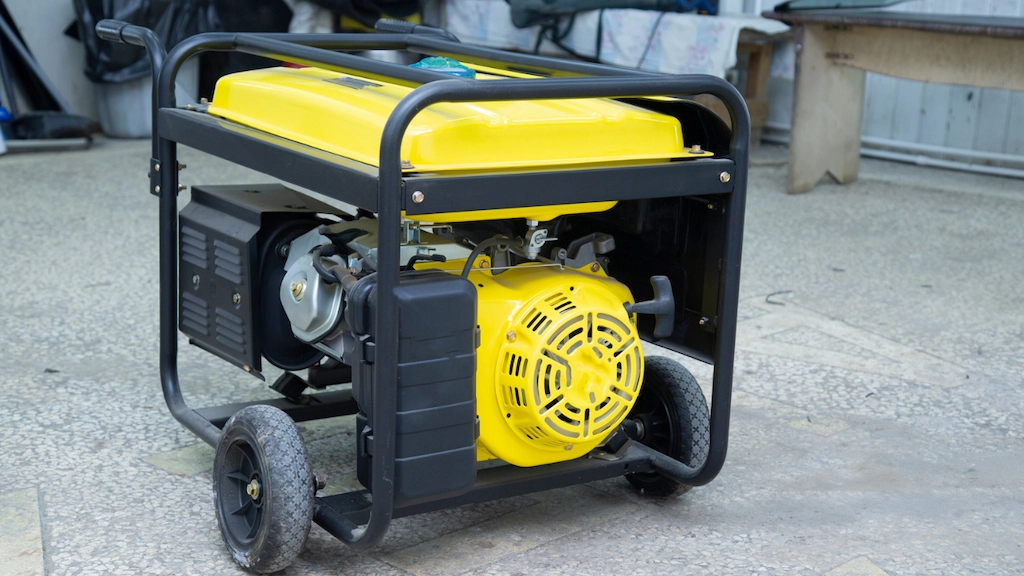
A portable generator is a movable unit that produces electricity using an engine powered by fuel, typically gasoline, although some models use propane or other fuels.
Portable generators are popular because they generally cost less upfront than permanently installed standby systems and can be used in different locations when needed. For homeowners looking for a portable generator for home use, they can provide a practical way to power selected appliances and equipment during an outage.
Depending on the model and its capacity, a portable generator may be able to run a refrigerator, several lights, phone chargers, or other essential items.
However, portable generators require more hands-on management than standby systems.
Depending on the model, you’ll need to position the generator in an appropriate outdoor location, provide the required fuel, start it according to the manufacturer’s instructions, and monitor its operation. You’ll also need to plan how electricity will reach the appliances or circuits you want to power.
Advantages of a Portable Generator
- Lower upfront cost: Portable generators typically have a lower purchase price than whole-home standby systems.
- Flexibility: You can use a portable unit for different approved applications, provided you follow the manufacturer’s instructions.
- Power for selected essentials: The right model can supply electricity to specific appliances or equipment during an outage.
- Less permanent installation: Basic portable generator use doesn’t require a permanent connection to your home’s electrical system, although properly installed transfer equipment may be appropriate or necessary when connecting to household circuits.
Limitations of a Portable Generator
Portable generators require more preparation and attention during an outage. You’ll need to manage fuel, follow startup and shutdown procedures, and make sure the generator is operated safely.
They also generally provide less capacity than larger standby systems, although actual output varies by model.
Safety is especially important. Portable generators produce carbon monoxide, a colorless, odorless gas that can be deadly. Never operate one inside your home, garage, basement, or another enclosed or partially enclosed space. Keep it outdoors and positioned well away from doors, windows, and vents, following the manufacturer’s clearance instructions and current safety guidance.
Never plug a generator directly into a household wall outlet to power your home. Improper connections can cause dangerous backfeeding into utility lines. A properly installed transfer switch or other approved connection equipment should be used when connecting a generator to household circuits.
A portable generator can be a practical option if you want to power a few essentials and are comfortable handling the setup and safety requirements each time the power goes out.
What Is a Whole-Home Standby Generator?
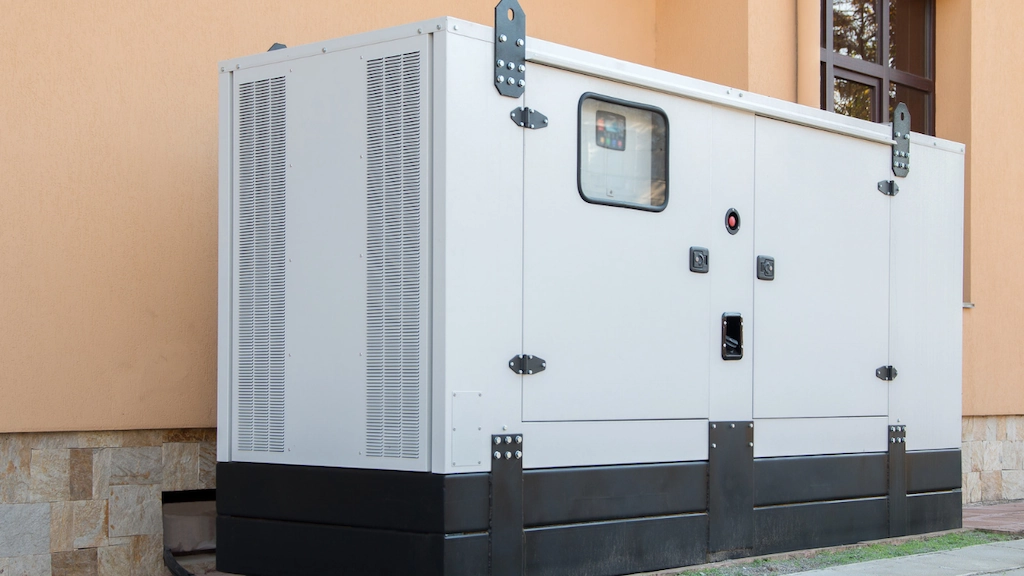
A whole-home standby generator is a permanently installed backup power system designed to supply electricity to your home when utility power is interrupted.
Unlike a portable generator, a standby system is connected to an approved fuel source and your home’s electrical system through appropriate transfer equipment. Many residential models use natural gas or propane.
When utility power fails, an automatic standby generator system detects the outage and follows its programmed startup and transfer sequence. Once the generator is running and the transfer equipment switches the appropriate electrical loads to backup power, the supported circuits or systems can operate without you having to manually start and connect a portable unit.
When utility power returns, the system can automatically switch back to utility power and shut down according to the manufacturer’s operating sequence.
That convenience can be particularly valuable during severe weather, overnight outages, or situations when you’re away from home.
Advantages of a Whole-Home Standby Generator
- Automatic operation: A properly installed automatic standby generator system is designed to respond to a utility outage without requiring you to manually start the generator.
- Greater convenience: You don’t have to move a portable unit into position or repeatedly manage the connection process.
- Broader backup power options: Depending on its capacity and configuration, a standby generator can support selected essential circuits or a larger portion of your home’s electrical demand.
- Permanent installation: The generator is installed in a designated outdoor location and connected to the home’s electrical system and approved fuel supply.
- Peace of mind: Backup power can help keep supported equipment operating during an outage, including refrigeration, heating equipment, sump pumps, and other priorities when properly sized and configured.
Limitations of a Whole-Home Standby Generator
The biggest consideration is cost. A permanently installed system typically requires a larger upfront investment than a portable generator.
The total cost depends on the generator model, electrical demand, installation location, fuel availability, transfer equipment, permitting, and any additional work needed to prepare your property.
Standby generators also require routine maintenance. Even though the system operates automatically, it still needs appropriate inspections and service to help ensure it’s ready when an outage occurs.
It’s also important to understand that a whole-home generator doesn’t automatically mean every appliance can run simultaneously. The generator must be properly sized for your home’s electrical demand and the loads you want it to support.
For homeowners who value automatic operation and want a more comprehensive backup power solution, a standby generator may be worth the additional investment.
Whole-Home Generator vs. Portable Generator: What’s the Difference?
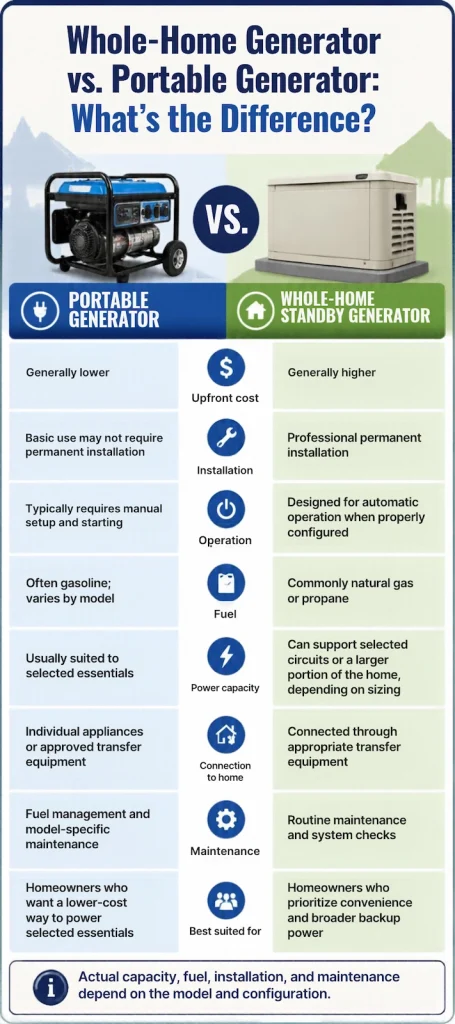
Both generator types can provide backup electricity, but they offer different levels of convenience, capacity, and installation requirements.When researching a standby generator vs. portable generator, consider more than the initial purchase price. Think about how often your home loses power, which appliances you need to operate, how comfortable you are managing a generator during an outage, and how much convenience matters to your household.
Neither option is automatically the right choice for every home. The better fit depends on your electrical needs, budget, fuel access, and expectations for backup power.
Which Generator Is Right for Your Home?
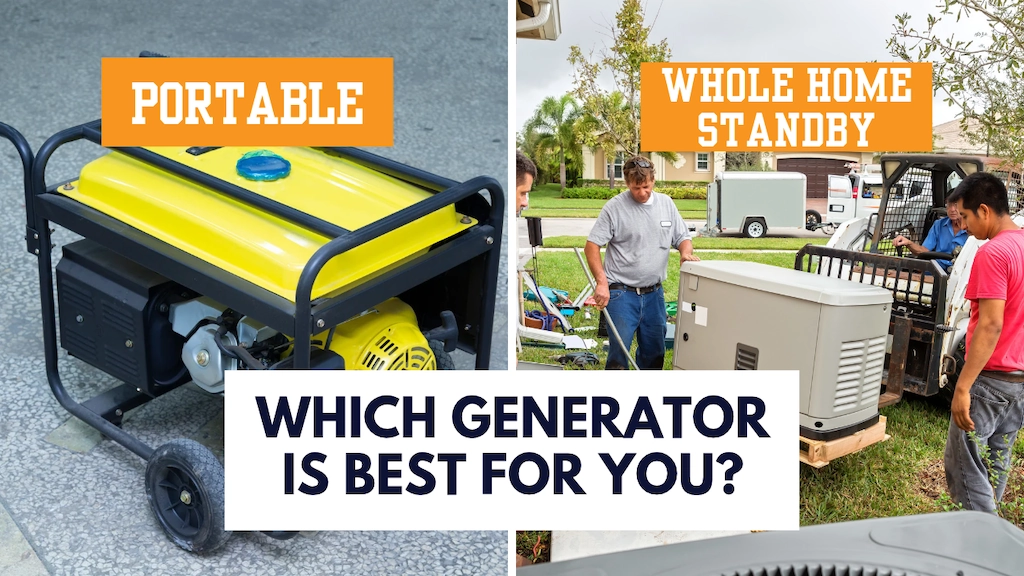
Before choosing a generator, consider how your household would manage without utility power.
A Portable Generator May Be Right for You If:
- You primarily want to power a few essential appliances.
- Your budget favors a lower upfront investment.
- You’re comfortable following the required setup, fueling, and operating procedures.
- You have a safe outdoor location for operation and a plan for connecting your equipment.
- You’re prepared to manage the generator during an outage.
For example, a portable generator may be sufficient if your primary concerns are keeping food cold, charging phones, and running a few lights during a temporary outage. The generator must have enough capacity for the equipment you intend to operate.
A Whole-Home Standby Generator May Be Right for You If:
- You want backup power to start automatically when utility power is interrupted.
- You want to keep more of your home’s essential systems operating.
- Your household depends on equipment such as a well pump, sump pump, or certain medical devices.
- You experience outages that make heating, refrigeration, or other essential functions a significant concern.
- You prefer a permanently installed system instead of manually setting up a generator during a storm.
For example, a homeowner in a rural area who relies on a well pump may prioritize keeping water available during an extended outage. Another household may want to support its heating system, refrigerator, sump pump, and selected lighting.
The right generator capacity and configuration will depend on the actual electrical loads involved. Some high-demand appliances may need to be managed or excluded unless the system is designed to support them.
Don’t Forget to Consider Your Fuel Source
Fuel availability can influence your decision, too.
Portable generators commonly run on gasoline, which means you’ll need to store and handle fuel safely and plan for replenishment during a prolonged outage. Other portable models use different fuels.
Standby generators commonly operate on natural gas or propane. Your property’s existing fuel access, supply capacity, and installation requirements will help determine which options are suitable.
An electrician can assess your electrical needs and help coordinate the considerations involved in planning a permanent standby generator installation.
Why Professional Generator Installation Matters
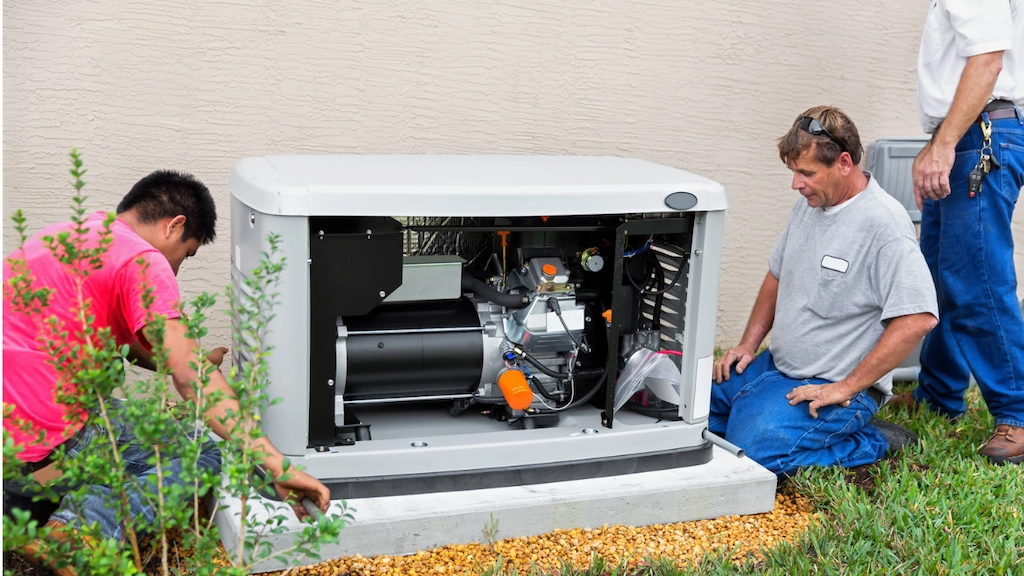
If you’re considering a whole-home standby generator, proper installation is essential to its safe and reliable operation.
A professional installation involves more than selecting a generator with enough advertised wattage. The system must be appropriate for your home’s electrical demand, installed in a suitable location, connected to an approved fuel supply, and integrated with the electrical system using the correct transfer equipment.
An electrician can help evaluate:
- Your electrical load: Which appliances, circuits, and systems do you want to keep running during an outage?
- Generator capacity: What size and configuration can support those priorities?
- Transfer equipment: How will the system safely switch between utility power and generator power?
- Installation location: Is there an appropriate outdoor location that meets manufacturer clearances and applicable requirements?
- Fuel availability: Is natural gas or propane appropriate and available for your installation?
- Applicable requirements: What permits, inspections, and other requirements apply to your project?
These details help ensure your backup power system is designed around your home’s actual needs rather than a one-size-fits-all recommendation.
For homeowners exploring generator installation in Western PA, working with a qualified electrical contractor is an important step toward choosing a system that meets the property’s requirements.
If you’re leaning toward a portable generator, safe operation still matters. Follow the manufacturer’s instructions, use the generator outdoors well away from openings, install carbon monoxide alarms in your home, and never connect a generator to household wiring without approved transfer equipment installed correctly.
Prepare for Winter Power Outages With a Home Backup Generator
Winter power outage preparation starts before the weather forecast calls for snow or ice. Knowing which systems you need to keep running, understanding your fuel options, and choosing the right generator can help you make a plan before an outage happens.
A home backup generator can provide electricity when utility power is interrupted, but the right solution depends on what you need it to do.
For some households, a portable generator is a practical way to power a few essentials. For others, a whole-house generator offers the convenience of a permanently installed system designed to support more of the home’s electrical demand.
If you’re considering a Generac whole-home generator, Kinsmen Electric can help you explore your options. The team installs Generac standby generators and offers free on-site assessments to discuss your property’s electrical needs, fuel availability, and installation considerations.
The goal is to help you find a backup power solution that makes sense for your home and your priorities.
Don’t wait until the next power outage to make a plan.
Contact Kinsmen Electric to schedule your free on-site assessment and explore whole-home generator options for your home.
Kinsmen Electric serves Somerset and Western Pennsylvania. Call (814) 445-6388 to get started.
Frequently Asked Questions About Home Generators
Is a whole-home generator better than a portable generator?
It depends on your needs and budget. A portable generator is generally less expensive upfront and can power selected appliances. A whole-home standby generator costs more to install but can provide automatic operation and support selected circuits or a larger portion of your home’s electrical demand, depending on its capacity and configuration.
How much does a whole-home generator cost to install?
The cost of a whole-home generator installation varies based on the generator’s capacity, your home’s electrical requirements, fuel availability, transfer equipment, installation location, and any additional electrical or site work required. An on-site assessment can help determine the appropriate system and provide a project-specific estimate.
Can a portable generator power an entire house?
Some larger portable generators can supply substantial power, but whether one can support an entire home depends on its output and the home’s electrical demand. Many homeowners use portable generators to run selected essentials. Connecting a generator to household circuits requires appropriate transfer equipment installed correctly.
Does a whole-home generator turn on automatically?
An automatic standby generator is designed to detect a utility power interruption and start according to its control system. Once it is running, the transfer equipment switches the supported electrical loads to generator power. The system must be installed, configured, and maintained correctly for this operation.
What size standby generator does my home need?
The appropriate generator size depends on which appliances and circuits you want to power, their electrical demand, and whether certain loads will operate simultaneously. An electrician can evaluate your home’s needs and help determine the right capacity and configuration.